
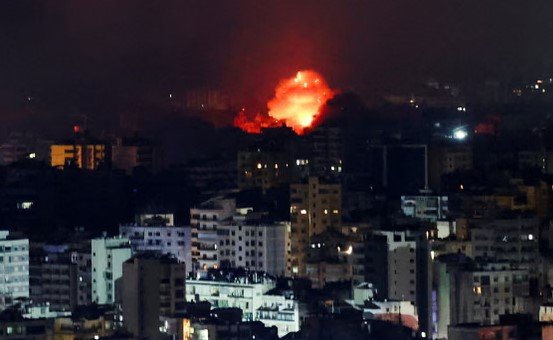
A series of powerful Israeli missile strikes tore through the heart of Beirut overnight, leaving at least 10 people dead and dozens more injured as the regional conflict reaches a terrifying new crescendo. The strikes, which targeted several residential and commercial districts, sent shockwaves through the Lebanese capital, collapsing multi-story buildings and trapping families under layers of concrete and twisted metal. Emergency responders and civil defense teams worked frantically under the glow of flares and flashlights, digging through the rubble with their bare hands in a desperate search for survivors. Initial reports from local health officials indicate that the death toll is likely to rise as recovery efforts continue into the daylight hours, with many of the injured listed in critical condition at overwhelmed city hospitals.
The overnight bombardment marks one of the most significant escalations in the aerial campaign against Beirut, as the Israeli military claimed the strikes were “precision hits” aimed at strategic command centers and underground infrastructure used by militant groups. However, the reality on the ground told a story of widespread devastation, with entire neighborhood blocks scorched and thousands of panicked residents fleeing into the streets in the middle of the night. The sound of secondary explosions echoed through the city for hours, further complicating rescue missions and igniting massive fires that proved difficult to contain. For the people of Beirut, the night was a grim reminder of the city’s volatile history, as the skyline was illuminated not by lights, but by the orange hue of burning wreckage and the plumes of thick, acrid smoke.
International reaction to the strikes was swift, with various world leaders expressing deep concern over the mounting civilian casualties and the potential for an all-out regional war. Diplomatic channels are reportedly buzzing as mediators attempt to negotiate a temporary ceasefire, though both sides remain entrenched in their military objectives. In Beirut, a sense of profound grief and anger has taken hold of the population, with many questioning where they can go to find safety when even the capital city is no longer a sanctuary. The humanitarian situation is rapidly deteriorating, as the influx of displaced families from the suburbs puts an unbearable strain on the city’s already crumbling infrastructure and limited medical supplies.
As the sun rose over the scarred landscape of Beirut, the scale of the destruction became tragically clear. Smoldering ruins replaced what were once vibrant homes, and the silence of the morning was broken only by the sirens of ambulances and the cries of those searching for missing loved ones. The Israeli military has signaled that its operations will continue until its security goals are met, while Lebanese authorities have called for an emergency session of the UN Security Council to address what they describe as “indiscriminate aggression.” With no clear end in sight, the residents of Beirut remain on edge, bracing for the possibility of further strikes and fearing that the night’s horrors may only be the beginning of a much longer and bloodier chapter in the conflict.