
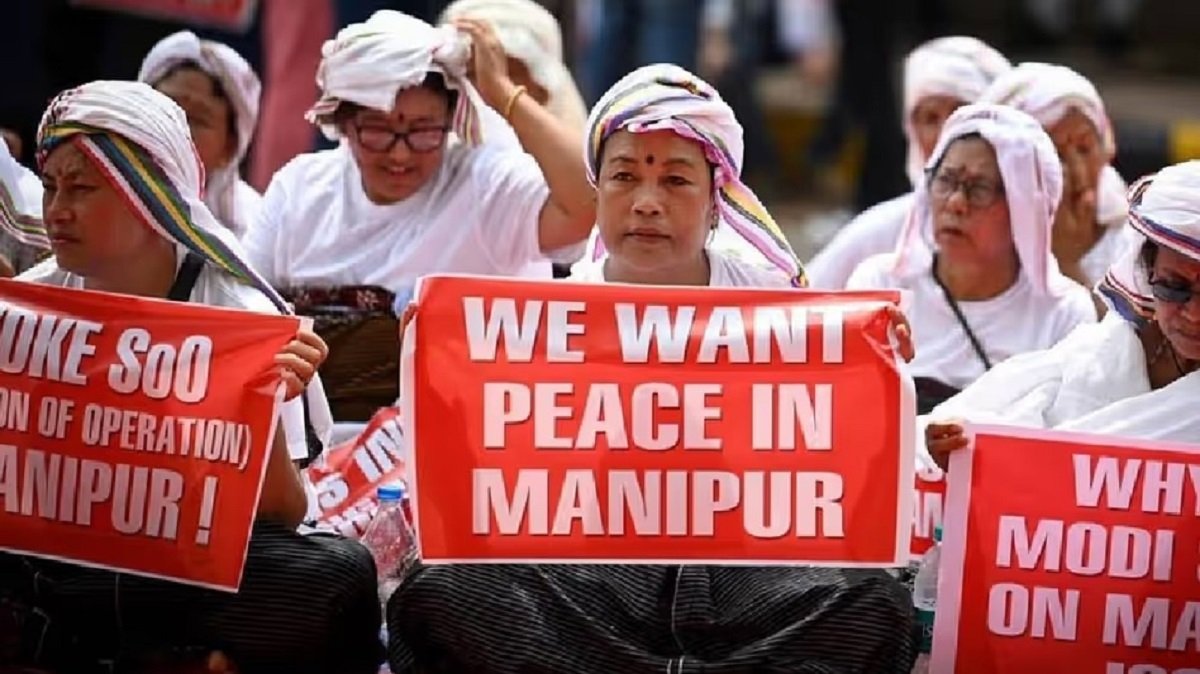
As the BJP-led government starts its term in Manipur amidst ongoing protests by Kuki-Zo-Hmar communities, the Indian government is reportedly finalizing a peace agreement with Kuki-Zo groups. This proposed agreement is expected to be similar to the recent Frontier Nagaland Territorial Authority (FNTA) deal which grants autonomy to specific districts in Nagaland. The Centre has assured Kuki leaders of a comparable framework, contributing to the support of three Kuki MLAs, including Deputy Chief Minister Nemcha Kipgen, for the new government under Meitei leader Yumnan Khemchand Singh.
However, it appears that the finalization of this agreement may be postponed until after the upcoming Assembly elections, aimed at fostering consensus in the predominantly Meitei Imphal Valley. Current discussions are focused on enhancing autonomy, financial authority, and administrative powers for Manipur’s hill districts under Article 371C of the Constitution, which governs hill area administration, contrasting with Article 371A that provides stronger protections for Nagaland’s tribal regions.
Officials indicate that negotiations might involve either modifying Article 371C or creating a new constitutional provision that grants hill tribes greater powers in legislation, administration, and finance. Although this would not fulfill the Kuki-Zo’s demand for a separate Union Territory, it could address some of their aspirations for self-governance. Progress has reportedly been made through conversations with Suspension of Operations (SoO) groups, indicating a consensus on what a potential agreement could entail.
The anticipated agreement may permit self-governance through the Manipur Legislative Assembly, financial redistribution based on population and geographical needs, legislative control over specific local issues, and land and employment safety via councils. An official from the Ministry of Home Affairs (MHA) mentioned that while establishing a separate administrative unit seems improbable, a significantly empowering solution is within reach.
A draft deal was prepared in 2023 but was put on hold due to violence in the state. Under Article 371C, powers remain limited compared to those under Article 371A. Historically, many powers planned for the Autonomous District Councils (ADCs) under Article 371C weren’t implemented, leaving key departments under state control, with ADC authority often restricted to recommendations. MHA officials recognized that ADCs in Manipur have struggled due to inadequate financial support and inconsistent budget allocations, resulting in some councils being unable to meet payroll. Efforts to bolster ADC powers via legislative changes have consistently failed or been weakened over time, such as the rollbacks of amendments made in 2000 and the perceived inadequacies of those in 2008.