
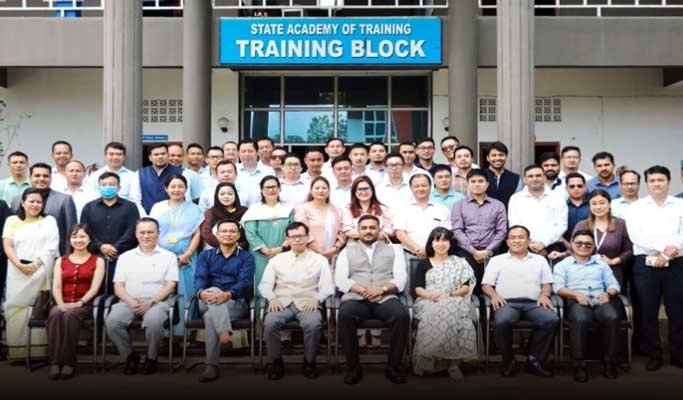
The Directorate Auditorium in Lamphelpat recently served as the hub for a critical dialogue on the future of state administration. Organized by the Department of Economics and Statistics, the internal consultative workshop, “Using Administrative Data for Governance,” brought together key stakeholders to bridge the gap between data collection and practical policy implementation.
The inaugural session was led by high-ranking officials, including the Secretary of Economics and Statistics, Shri Joseph Pauline Kamson, IAS; Director Ms. Peijonna Kamei; and Joint Director Shri L. Ibo Singh.
In his keynote address, Secretary Kamson noted that while sectors like health, education, and agriculture are generating more data than ever before, this information remains largely underutilized. He pointed to “departmental silos,” a lack of standardization, and limited interoperability as the primary hurdles preventing the state from reaching its full developmental potential.
The Director, Ms. Peijonna Kamei, elaborated on the workshop’s mission, stating that the gathering aimed to solicit direct feedback from line departments. This feedback is essential for building a shared technical framework that allows different government branches to “speak the same language” when it comes to data.
The technical sessions featured a robust exchange of ideas involving experts from the Ministry of Statistics and Programme Implementation (MoSPI), as well as representatives from global consultancy firms KPMG and CEGIS. These experts provided presentations on data linkage—a process that connects disparate datasets to provide a clearer picture of the state’s socio-economic health.
This workshop serves as more than just a local meeting; it is a preparatory step for the national stage. The inputs gathered here will be forwarded to MoSPI to help shape the agenda for the upcoming national-level summit on “Data for Development,” scheduled for April 2026.
By addressing institutional and technical challenges today, Manipur aims to set a benchmark for how regional data can drive national progress.