
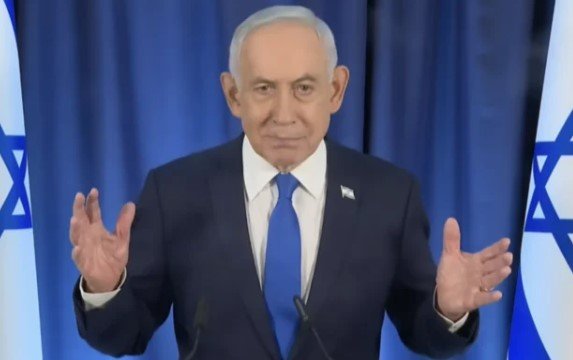
In a major escalation of rhetoric that has further destabilized an already volatile Middle East, Israeli Prime Minister Benjamin Netanyahu expressed uncertainty regarding the Iranian public’s ability to oust their current government while simultaneously issuing a chilling warning to Iran’s new Supreme Leader. Speaking during a high-profile security summit, Netanyahu acknowledged the deep-seated domestic unrest within Iran but noted that he could not predict whether the ongoing civilian protests would ultimately lead to the collapse of the clerical establishment. However, his tone shifted from analytical to aggressive when addressing the leadership in Tehran, as he explicitly threatened the new Supreme Leader with unprecedented consequences should the regime continue its pursuit of nuclear capabilities or its support for regional proxy militias. These remarks signify a hardening of Israel’s “red line” policy, suggesting that the Israeli military is prepared to target the highest echelons of Iranian authority if provoked.
The Prime Minister’s comments come at a time when Iran is undergoing a sensitive leadership transition, making his direct threats particularly provocative. Netanyahu argued that the “head of the snake” resides in Tehran and asserted that Israel no longer views the conflict as a shadow war, but rather as a direct confrontation where no one, including the Supreme Leader, is immune from retaliation. This shift in discourse is seen by many as an attempt to project strength to both a domestic audience and international allies, reinforcing the idea that Israel will act unilaterally if it perceives an existential threat. Critics and diplomats have expressed concern that such personalized threats against a head of state could diminish the possibility of back-channel diplomacy and instead push the two nations toward an all-out conventional war.
Furthermore, Netanyahu’s skepticism about the Iranian people’s power to overthrow the regime reflects a more cautious assessment of the “Woman, Life, Freedom” movement and subsequent uprisings that have shaken Iran in recent years. While he praised the courage of the Iranian dissidents, his lack of certainty regarding a regime change suggests that Israel is preparing for a long-term struggle against the current power structure rather than relying on an internal revolution to solve the security crisis. As the international community watches with bated breath, the Israeli leader’s dual approach—questioning the internal stability of his adversary while threatening its leadership with military might—sets the stage for an even more intense phase of the Iran-Israel rivalry. This rhetoric is expected to trigger a fierce response from Tehran, potentially leading to increased activity across various fronts in Lebanon, Syria, and the Red Sea