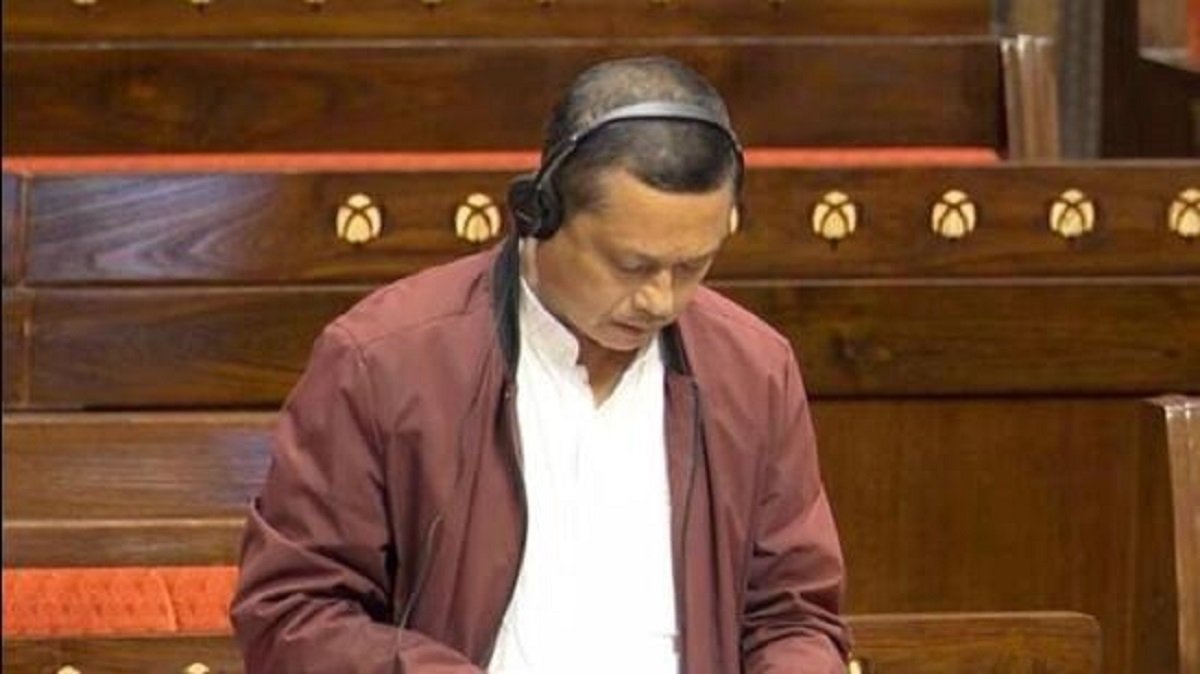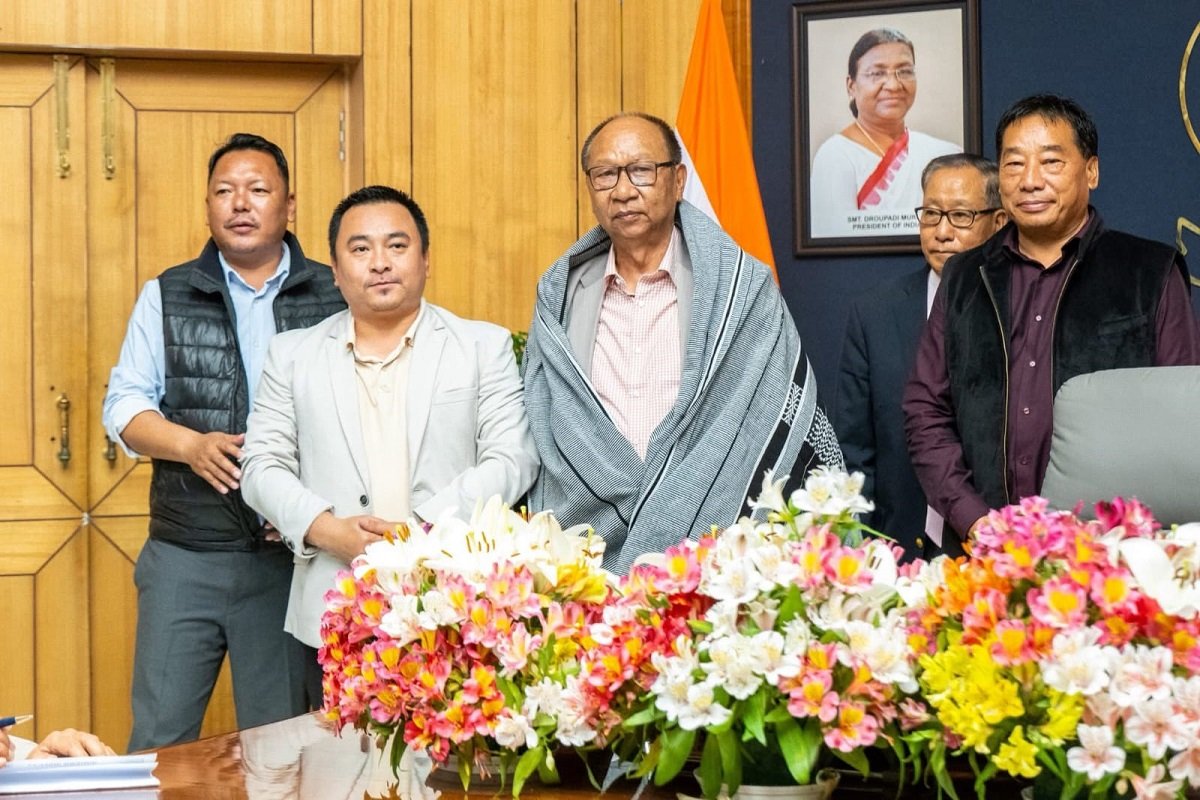

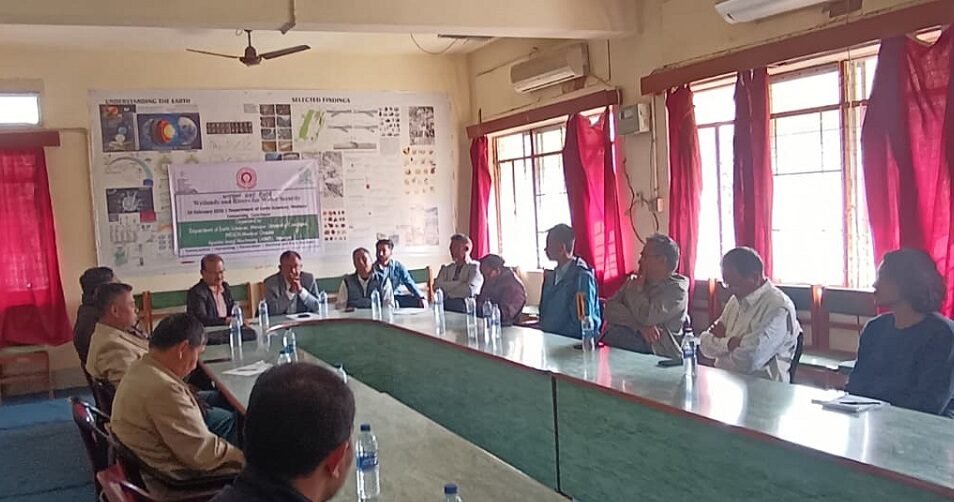
A panel discussion titled “Wetlands and Rivers for Water Security” took place at Manipur University in Canchipur. The Department of Earth Sciences hosted the event. It was organized jointly with the INTACH Manipur Chapter and Apunba Imagi Machasing (AIMS). The panel featured several prominent experts and officials. Dr RK Ranjan Singh, former Minister of State for External Affairs and Higher Education, attended the event. Prof Huidrom Birkumar Singh, Chief Scientist at CSIR NEIST Manipur, also spoke on the occasion. Academic voices included Prof Soibam Ibotombi Singh, Dr Yumkhaibam Rajesh, and Prof Maibam Bidyananda. All three represent the host department. Other panellists were Dr RK Chingkhei from DMU, Yumnam Jiten from CRAM, and AIMS Director Dr Atom Sunil. Bashispatimayum Deben Sharma of the Inter-Faith Forum and former NEFI consultant O. Somorendro completed the roster.
Panellists and attendees reached a clear consensus. Manipur currently faces severe water insecurity. Human activities are primarily responsible for the scarcity of water including quality water. These include reckless deforestation for agriculture, the illegal timber trade, and poppy cultivation. Unregulated riverbed sand mining and rapid urbanisation also contribute heavily. Natural factors compound the crisis. The state’s geomorphology limits the water retention capacity of its hills. River and wetland siltation further degrade the water supply. Finally, broader climate change plays a significant role in driving this insecurity.
The gathering resolved that wetlands and rivers are central to achieving water security in Manipur and authorities must conduct a comprehensive scientific study of local rivers and wetlands. This study should create a database mapping out specific vulnerabilities and strengths.
Future discussions must adopt a targeted approach. They should analyze specific wetlands, rivers, and their respective basins to pinpoint the exact causes of local water insecurity. Subsequent meetings must focus on concrete mitigation strategies to counter the water crisis including the traditional practice of dredging, it resolved. Officials must investigate potential constitutional oversights. They must also identify any institutional discrepancies or overlapping jurisdictions. The government must review existing environmental policies. This includes clarifying the rules surrounding riverbed sand mining, deforestation and stopping illegal poppy cultivation, and ensuring strict enforcement by the relevant authorities.
Event organisers must collaborate closely with government departments during all future discussions.
The final findings of the proposed study must be submitted to the Government of Manipur. This submission will serve as an official policy recommendation document, it resolved.