
President Luiz Inacio Lula da Silva of Brazil declared the opening of the Brazilian Trade and Investment Promotion Agency’s (Apex) first office in New Delhi. In a post on X, President Lula stated, “This agency works to promote Brazilian products and services abroad and to attract foreign investments to strategic sectors of the Brazilian economy.” “Two of the biggest countries in the Global South are Brazil and India. In 2025, our trade flow was $15.2 billion, and there is still much space for expansion. Jorge Viana, the president of Apex, and other government ministers were with me,” he said.
With the largest-ever Brazilian business group to go overseas, President Lula made a high-profile state visit to India this week, highlighting trade and economic cooperation as the cornerstone of bilateral engagement. In the midst of changing global trade dynamics brought on by tariff moves taken by the United States under President Donald Trump, Lula is joined by over 260 Brazilian enterprises, around 14 cabinet ministers, and numerous senior chief executives as India and Brazil want to deepen their commercial connections.
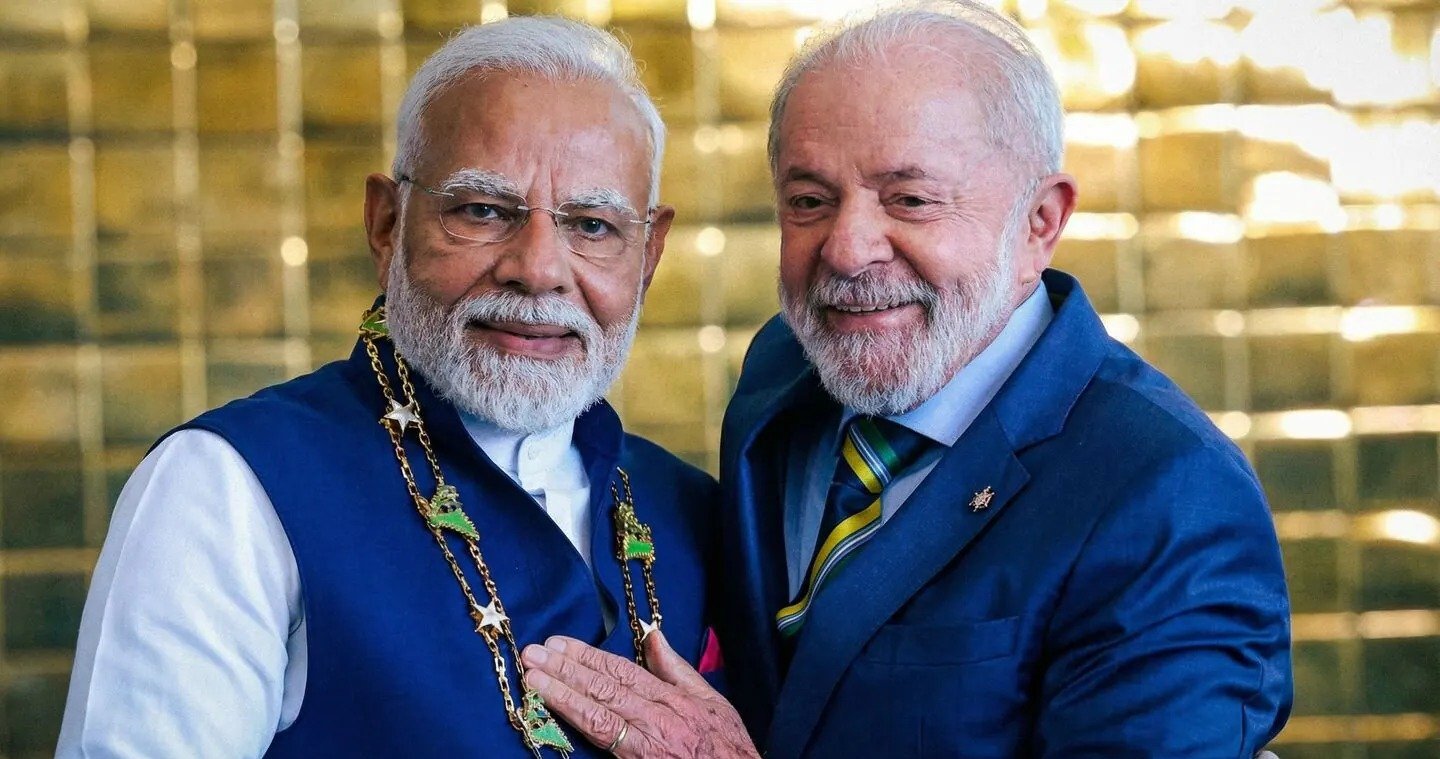
Lula’s visit takes place at the same time as he attended the AI Impact Summit in New Delhi, where he spoke about technology, digital public infrastructure, and the contribution of AI to equitable growth. On Wednesday, the Brazilian leader attended the summit, highlighting technology collaboration as a new and developing area of India-Brazil ties. On February 21, Lula is expected to have extensive bilateral discussions with Prime Minister Narendra Modi. The two leaders will examine the “entire gamut of bilateral relations,” according to the Ministry of External Affairs (MEA).
Topics of conversation are anticipated to include digital technologies, commerce, investment, energy, defense cooperation, and people-to-people ties. According to a statement released by the Ministry of External Affairs, “The leaders will also exchange views on regional and global issues of mutual interest, including cooperation in multilateral fora, reformed multilateralism, global governance, and issues concerning the Global South.”