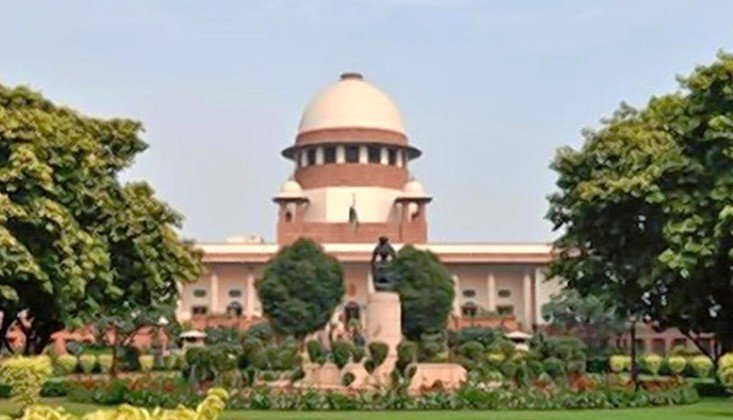

The Supreme Court of India has emphasized the critical need for a delicate balance between digital regulation and fundamental rights, even as the Central Government formally clarified that the Information Technology (Intermediary Guidelines and Digital Media Ethics Code) Rules are not intended to suppress humor, satire, or legitimate political criticism. During a high-profile hearing concerning the constitutionality of the recent amendments to the IT Rules—specifically the establishment of a government-appointed Fact-Check Unit (FCU)—the bench observed that while the spread of fake news on social media is a legitimate concern for national stability, the state must ensure that its regulatory framework does not create a “chilling effect” on the freedom of expression. In response to the court’s concerns, the Solicitor General, representing the Centre, provided a categorical assurance that the rules are designed solely to identify and mitigate “patently false” information related to government business and are not a tool to censor satirical content or dissenting opinions. The government argued that the digital landscape’s rapid evolution necessitates a mechanism to prevent the viral spread of misinformation that could incite public disorder, but it maintained that the FCU’s mandate is restricted to factual inaccuracies rather than subjective interpretations or creative expressions like political cartoons. However, the apex court remained vigilant, noting that the boundary between satire and misinformation can often be blurred, and any power granted to the government to be the “sole arbiter of truth” must be accompanied by robust judicial oversight and transparent grievance redressal mechanisms. Legal experts and digital rights activists have welcomed the court’s intervention, arguing that without explicit safeguards, the mere threat of a government-ordered takedown could compel social media intermediaries to over-censor content, thereby impoverishing the public discourse. The court’s insistence on a middle path suggests that while the government may retain some powers to police “fake news,” the final rules will likely be subject to strict guidelines that protect the vibrant tradition of Indian satire and the constitutional right to hold the establishment accountable through humor and critical analysis. As the proceedings continue, the legal community is watching closely to see if the court will mandate specific exemptions for creative and journalistic content to ensure that the “digital police” do not inadvertently silence the nation’s democratic spirit.
Judicial Guardrails: Supreme Court Advocates for Free Speech as Centre Affirms IT Rules Won’t Target Satire or Criticism