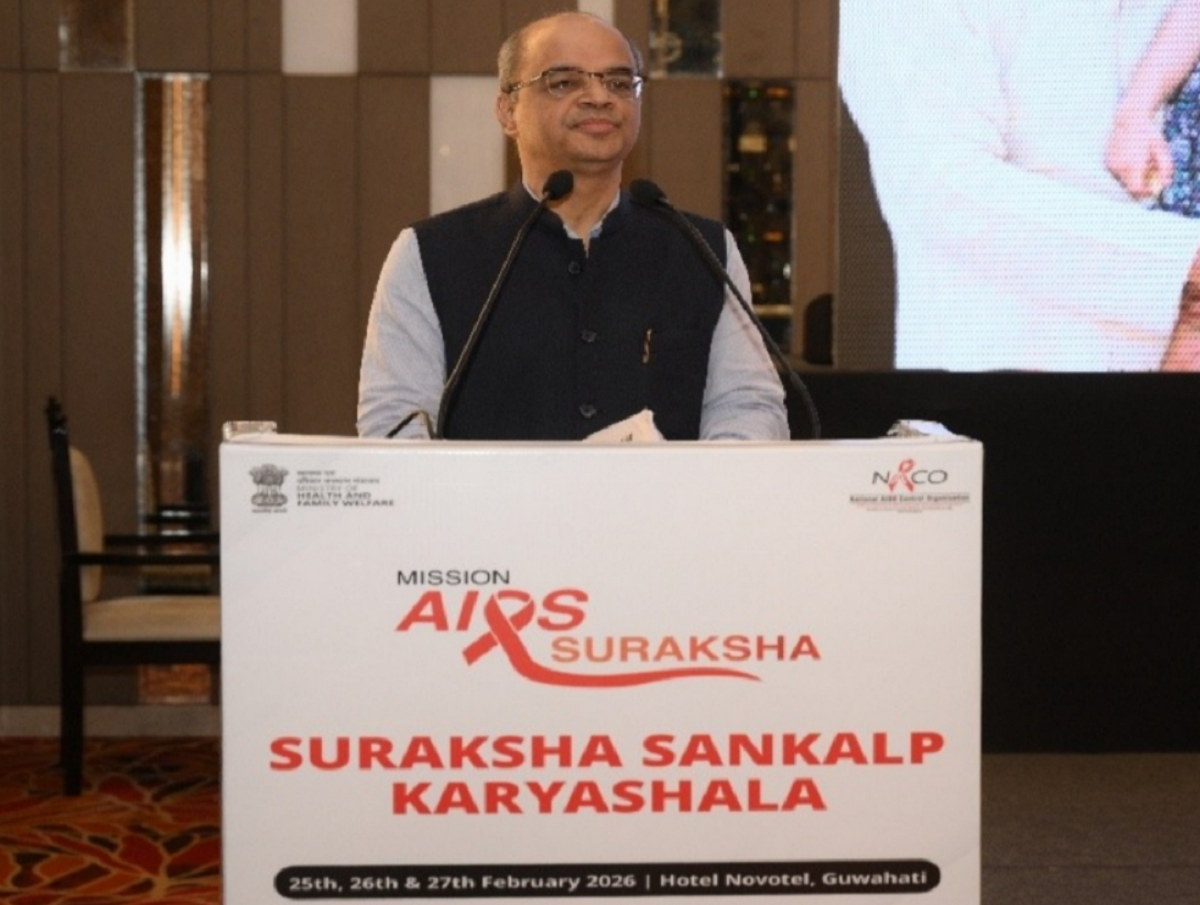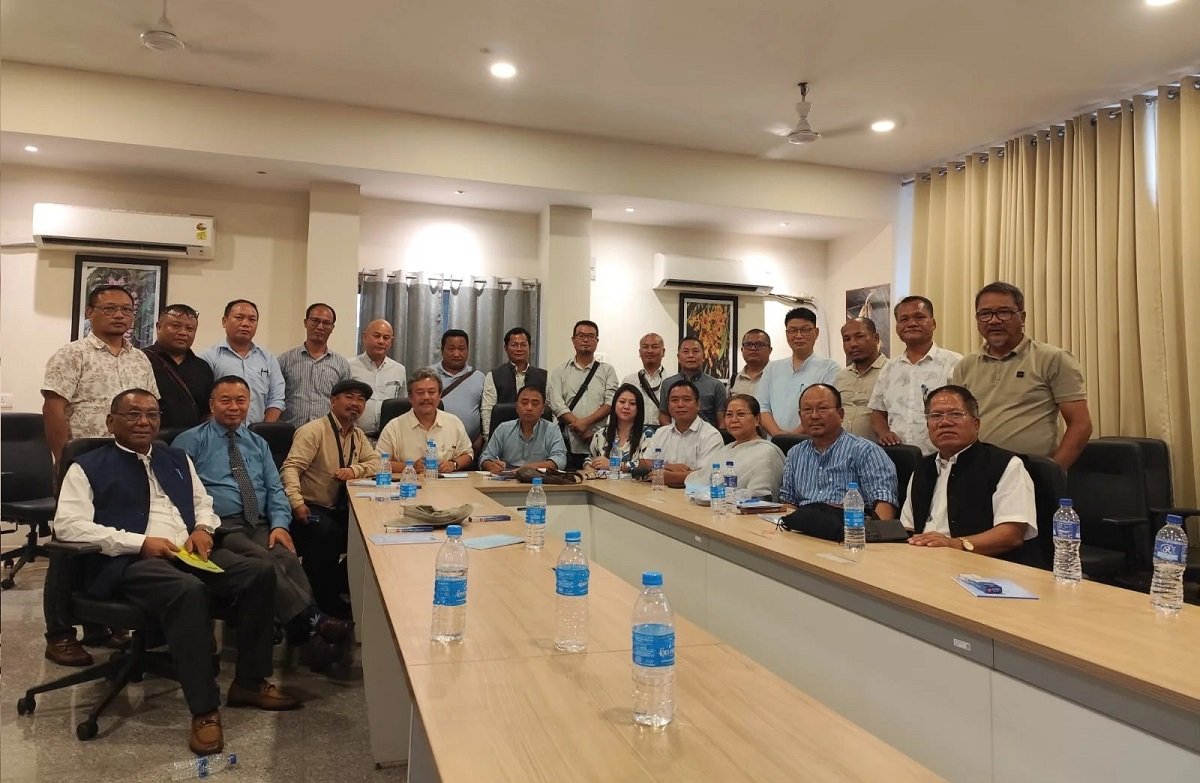

“Granular planning, data-driven monitoring and strong local ownership are essential to bend the curve of new infections in high-prevalence States like Manipur and Mizoram”, said Dr. Rakesh Gupta, Additional Secretary and Director General, NACO while addressing the participants in the second day of the ongoing three-day review workshop under Mission AIDS Suraksha.
During the workshop an intensive review of the HIV response in Manipur and Mizoram was undertaken. The workshop, being held in Guwahati, is convened by National AIDS Control Organisation (NACO) under the Ministry of Health & Family Welfare to accelerate progress in high-priority districts of the Northeastern region of the country.
Chaired by Dr Rakesh Gupta, the workshop is reviewing state-specific epidemiological trends, district-level gaps and targeted strategies to fast-track India’s progress towards achieving the 95-95-99 targets and attaining HIV control by December 1, 2027, coinciding with World AIDS Day.
During the deliberations on the Day 2 of Suraksha Sankalp Karyashala, detailed district-level reviews were undertaken for the 12 identified high-priority districts of Manipur and the 11 high-priority districts of Mizoram. The discussions examined epidemiological trends, programme coverage, treatment outcomes, viral load suppression levels and outreach among high-risk groups.
Manipur, with an adult HIV prevalence of 0.81 per cent and an estimated burden of over 23,000 people living with HIV, remains a priority State in the national HIV response. Districts including Bishnupur, Chandel, Churachandpur, Imphal East, Imphal West, Thoubal and Ukhrul were reviewed in detail to assess micro-level indicators and identify gaps in testing, linkage to treatment, retention in care and viral suppression.
Mizoram, which has the highest HIV prevalence rates in the country at 2.75 per cent and an estimated burden exceeding 26,000 people living with HIV, was also reviewed extensively. Districts such as Aizawl, Champhai, Kolasib, Lunglei, Serchhip, Mamit and Siaha were assessed for district-specific strategies, with particular emphasis on intensified testing strategies, index testing, improved linkage to treatment, scaling up OST services, and focused interventions among youth and high-risk groups. Special attention was given to bridging gaps in early detection and strengthening follow-up mechanisms to ensure treatment adherence and viral suppression.
Dr Gupta in his address emphasised, “India has set a clear and time-bound goal to attain HIV control by December 1, 2027. Every high-priority district must translate this commitment into measurable outcomes aligned with the 95-95-99 targets.”
The primary objective of the workshops is to strategise and accelerate progress towards achieving the global 95-95-99 targets, ensuring that 95% of all people living with HIV know their HIV status, 95% of those diagnosed receive sustained antiretroviral therapy (ART), and 99% of those on treatment achieve viral suppression.
The workshop will continue with further technical sessions and state reviews aimed at consolidating efforts under Mission AIDS Suraksha to attain HIV control by December 1, 2027.
Manipur, Mizoram under intensive review as India fast-tracks HIV control target for 2027