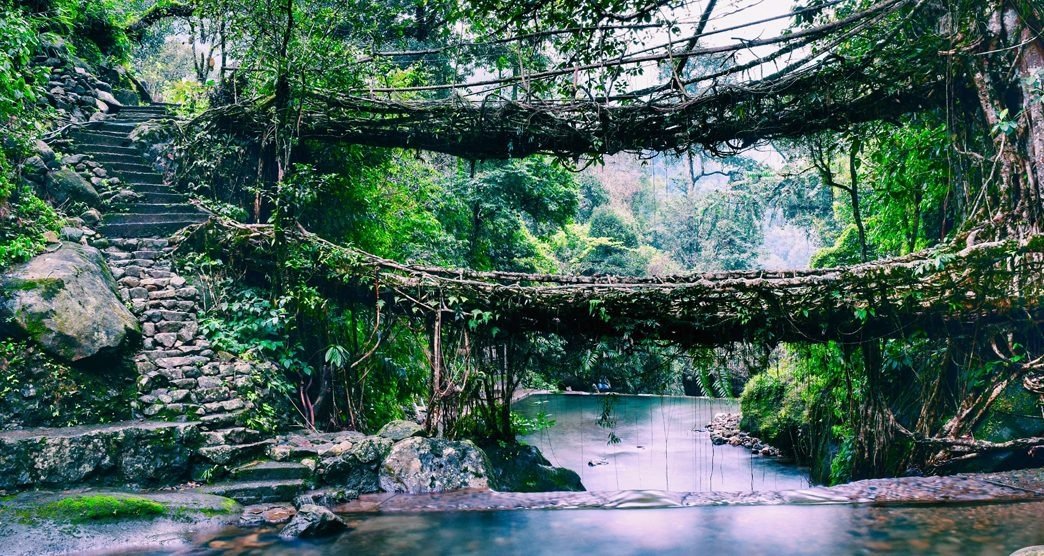

Meghalaya’s iconic Double Decker Living Root Bridge has earned global recognition, securing the second position on Time Out’s prestigious list of the 19 most beautiful bridges in the world. The natural marvel stands just behind Stari Most, the historic stone bridge in Bosnia and Herzegovina.
Published by global travel and culture magazine Time Out, the ranking celebrates bridges that blend beauty, history, innovation, and cultural significance. Meghalaya’s living root bridge was praised as a stunning example of sustainable indigenous engineering and harmony with nature.
Located in the remote village of Nongriat near Sohra (Cherrapunji), the bridge—also known as the Umshiang Double Decker Living Root Bridge—is crafted from the aerial roots of Ficus elastica, or rubber fig trees. Over generations, local Khasi communities have carefully guided the roots across streams to create strong, living walkways.
Time Out described the double-decker structure as “particularly gorgeous,” noting that adventurous visitors must descend and later climb approximately 3,500 steps through dense subtropical forests to reach it. The effort, however, rewards travelers with the rare experience of walking across a bridge that is alive and still growing. The bridge’s unique two-tier design also serves a practical purpose. During heavy monsoon floods, when water levels rise, the upper deck acts as a backup passageway—demonstrating both ingenuity and resilience. The global list also includes renowned landmarks such as the Victoria Falls Bridge, the Golden Bridge, the Brooklyn Bridge, and the Sydney Harbour Bridge.
With this latest recognition, Meghalaya’s living root bridges continue to strengthen their status as one of India’s most remarkable natural and cultural tourism attractions, drawing global admiration for their blend of ecology, tradition, and architectural brilliance.
Meghalaya’s Living Root Bridge Ranked World’s 2nd Most Beautiful by Time Out