
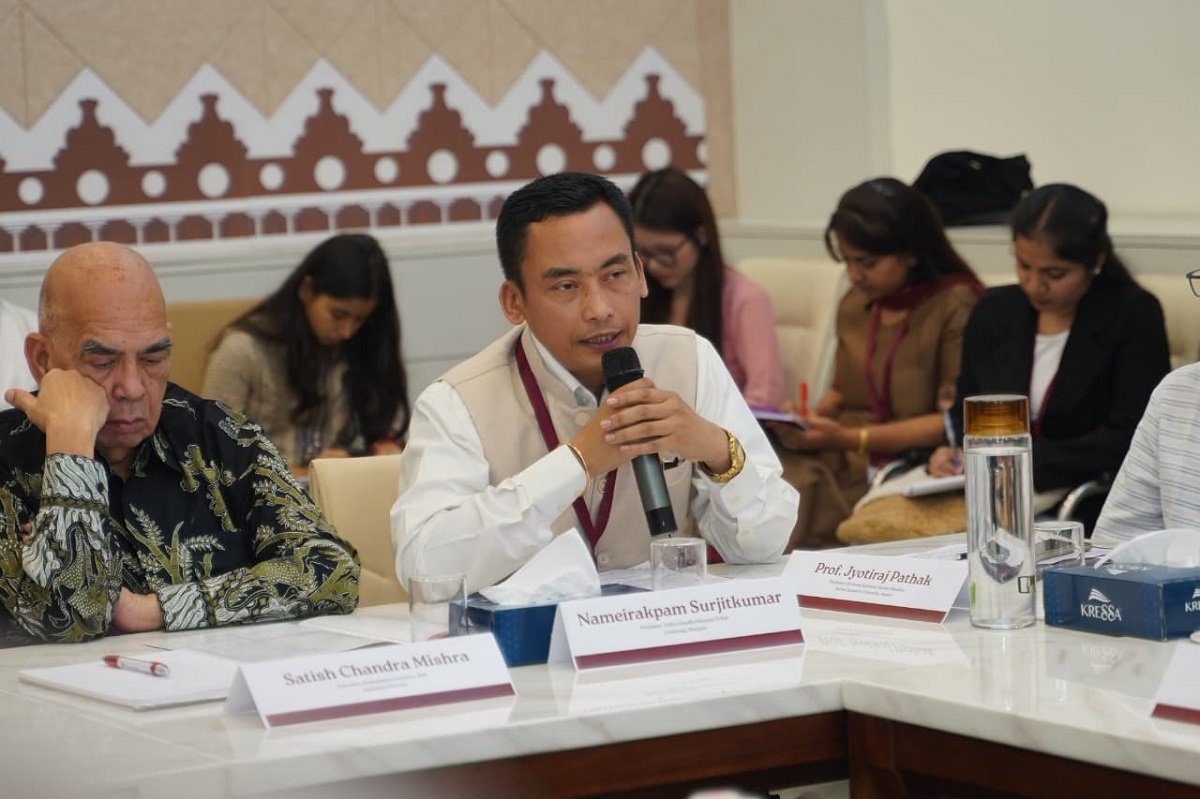
Aligning Manipur’s development pathway with the Nalanda Development Dialogue means moving beyond GDP, climate resilience, sustainable finance, inclusion, and cross-boundary cooperation, said Prof. N. Surjitkumar of Manipur during the Nalanda Development Dialogue—Inaugural Edition at Nalanda University, Rajgir, held from March 8 to 9. The Nalanda Development Dialogue has the vision of cooperative thinking and policy-making in today’s geopolitical and geo-economic context.
Delegates and representatives from countries including India, Poland, Nepal, the USA, Brazil, Germany, Indonesia, China, Japan, etc. participated in the Development Dialogue. North East India highlight—Conservation, connectivity: localization of SDGs as a long-term development strategy was one special session of the Dialogue, and it was represented by the team of North Eastern Training, Research, and Advocacy Foundation (NETRA), a group of scholars and delegates from Manipur, Sikkim, Assam, Arunachal Pradesh, Meghalaya, Nagaland, Mizoram, and Tripura. Prof. N. Surjitkumar of Indira Gandhi National Tribal University represented the state of Manipur in the Development Dialogue.
Prof. Surjit began his presentation by saying that Manipur is a strategically crucial border state in Northeast India with a youthful population, rich biodiversity, and a predominantly rural economy. Geographically, the state is divided between hills and valleys, and it shares an international border with Myanmar of about 352 kms. A defining development challenge is its geographic isolation combined with recurring instability, yet its greatest strength lies in strong community institutions and women-led markets, he further added. He focused on two important aspects: first, Manipur and India’s Act East Policy; second, governance innovation, mainly the initiatives taken by the present government in Manipur.
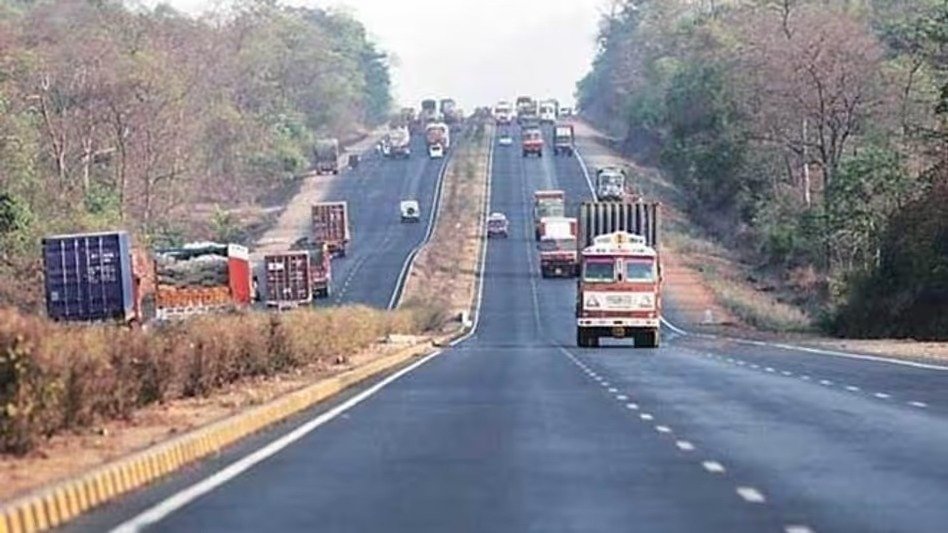
Prof. Surjit expressed that under India’s Act East Policy, Manipur serves as a gateway to Southeast Asia. Border trade points and improved highways enhance economic integration. Strengthening transport corridors, digital networks, and clean energy infrastructure can convert geographic peripherality into strategic advantage. He pointed out two prospects of the Act East Policy in the context of Northeast India, especially Manipur: i) improving trade in certain local products like tea, spices, handloom, and handicraft products, etc.; ii) improving transport and communications/connectivity, mainly about the India-Myanmar-Thailand Trilateral Highway and Indo-Myanmar road highway condition.
Prof. Surjit also talked about governance innovation by focusing on the present alliance government led by Hon’ble Chief Minister Y. Khemchand Singh’s peace-building efforts and inclusive dialogue. He further expressed the peace and security initiatives (rehabilitation and relief) and infrastructure and connectivity (road and bridge) undertaken and the announcement of Rs. 350 crores for women’s welfare in the 2026-27 budget allocation by the Hon’ble Chief Minister of Manipur. Prof. Surjit highlighted youth aspirations, skill development, and entrepreneurship in Manipur, where he mentioned one successful example of Meira Foods, a women-centric enterprise. He further said that Meira Foods serves as a localized entrepreneurial model integrating traditional with modern food processing practices with the vision of employment of young women and research and development for product innovation. He also mentioned arts and culture and sports in Manipur by giving the example of The National Sports University, which is India’s premier central university dedicated solely to sports education. Prof. Surjit concluded by saying that by 2040, Manipur can emerge as a Green Border Growth Hub—a model state that integrates ecological sustainability, women-led rural industries, digital entrepreneurship, and cross-border trade connectivity.