
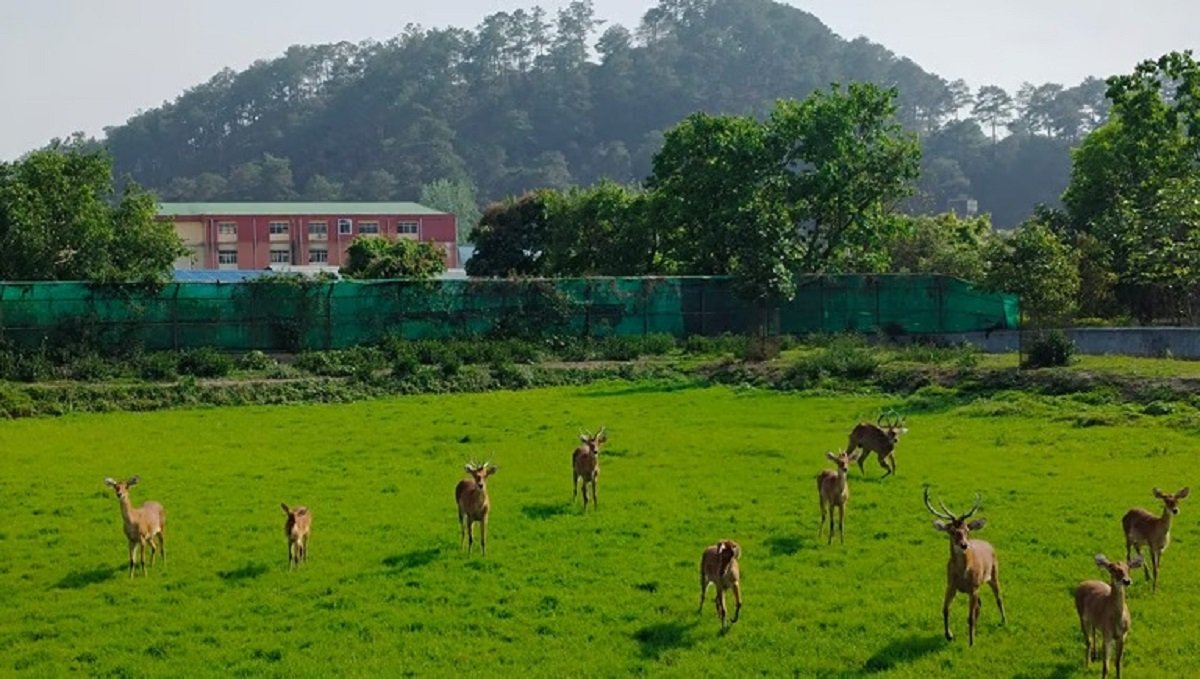
Manipur’s decision to establish a new conservation breeding centre for the endangered Sangai has once again drawn attention to the fragile ecological condition of Keibul Lamjao National Park, the species’ only natural habitat in the wild.
Known as the state animal of Manipur and popularly referred to as the “dancing deer,” the Sangai faces mounting challenges despite decades of conservation efforts. The latest estimates place the wild Sangai population at 172 in 2026, raising concerns among conservationists about the species’ long-term survival.
A report by researcher Neparm Tombi Meitei, published through Waari Singbul, points to the ecological changes caused by the commissioning of the Ithai Barrage in 1983 as a major factor affecting Sangai habitat. The barrage altered the natural seasonal water cycle of Loktak Lake, preventing the floating phumdis from settling on the lakebed during dry months, a process essential for nutrient replenishment.
Studies have linked this disruption to the gradual thinning of vegetation and weakening of the phumdis, threatening the stability of the floating habitat on which the Sangai depends for survival.
The species’ population has seen dramatic fluctuations over the years. From a critically low population of just 14 animals in 1975, the number increased steadily and reached 260 in 2016. However, recent estimates indicate a decline, with the latest count putting the population at 172.
To strengthen conservation efforts, the Forest Department has begun work on the proposed Manipur Sangai Conservation Breeding Centre on a seven-hectare site near Keibul Lamjao National Park. Construction activities, including land levelling and fencing, commenced in 2025. The facility is currently awaiting approval from the Central Zoo Authority and is expected to begin operations with three female and two male Sangai.
At present, captive Sangai populations are maintained at Langol and the Manipur Zoological Garden in Eroisemba.
The report also highlights several other challenges facing the species, including habitat pollution, possible genetic isolation due to the small population size, competition from hog deer and a shortage of conservation personnel.
Experts have emphasized the need to identify and develop alternative habitats such as Phumlen Pat and Yawa Lamjao to reduce the risks associated with maintaining a single wild population concentrated in one location.
Conservationists and community stakeholders argue that captive breeding alone will not ensure the survival of the endangered deer. They stress that restoring the ecological balance of Loktak Lake, protecting the phumdi ecosystem and strengthening community participation in conservation efforts are equally crucial.
As Manipur moves ahead with its new breeding centre, experts say the real challenge lies not only in increasing Sangai numbers but also in preserving the unique floating habitat that supports one of India’s rarest and most iconic wildlife species.