
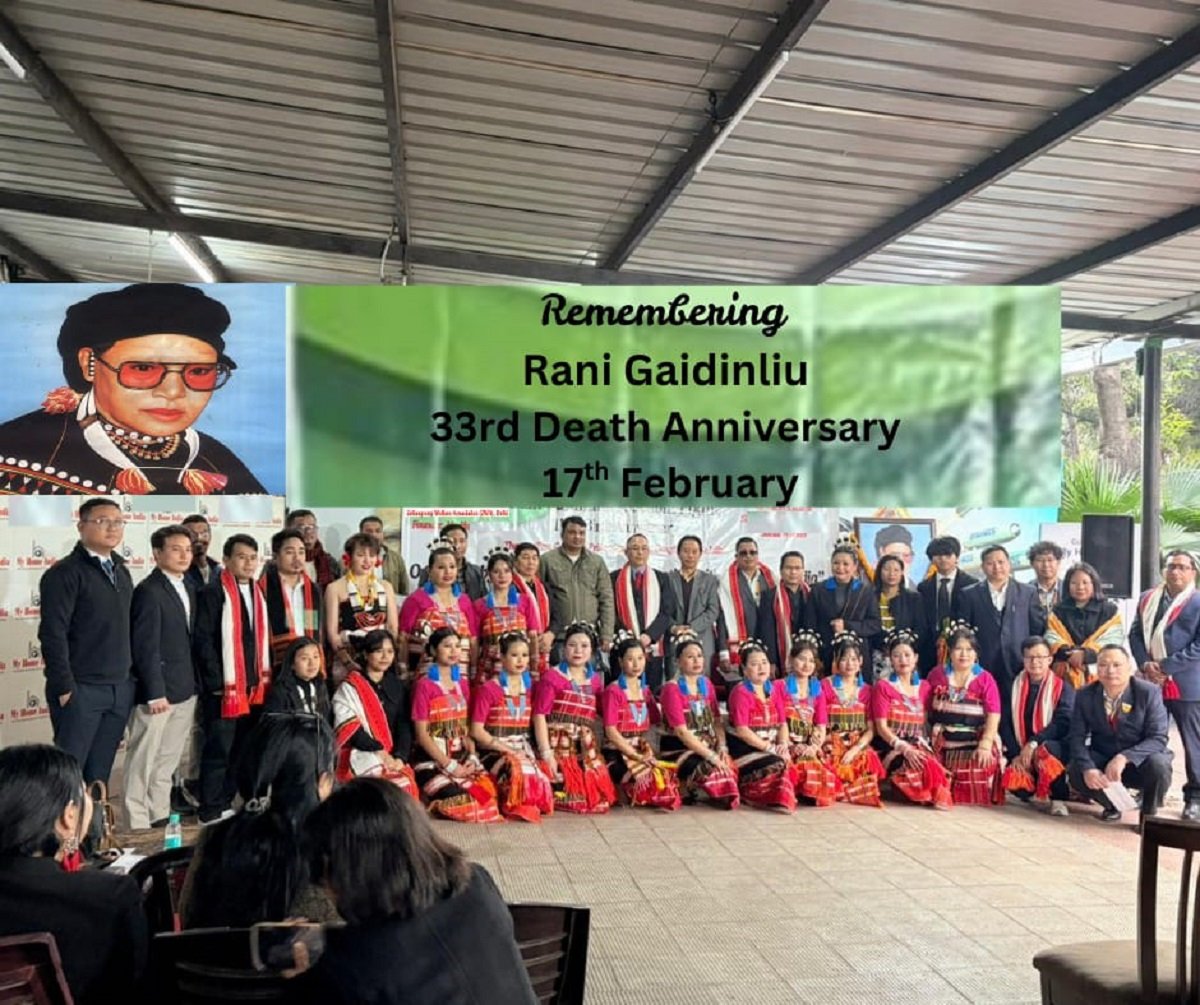
The Zeliangrong Welfare Association Delhi (ZWAD) solemnly commemorated the 33rd Death Anniversary of Rani Gaidinliu, the indomitable freedom fighter and spiritual-political leader who dedicated her entire life to the liberation, dignity, and unity of the Zeliangrong people, and to the broader cause of India’s independence. Born on January 26, 1915, at Nungkao (Luangkao) village in present-day Tamenglong district of Manipur, Rani Gaidinliu joined the freedom struggle at the age of 13 under the mentorship of her cousin and visionary leader, Haipou Jadonang. After Jadonang’s execution by the British in 1931, she assumed leadership of the Heraka movement and transformed it into a formidable resistance against colonial oppression. Her movement opposed unjust taxation, forced labour, and cultural subjugation. She mobilized the Zeliangrong people to assert their indigenous faith and identity while challenging the might of the British Empire. In March 1932, her followers confronted colonial forces in the historic Hangrum attack, that shows a remarkable courage despite limited arms.
Relentlessly pursued and hunted by the Britishers, she took refuge in secret jungle hideouts, including the caves of Mount Kisha of Magulong, sustained and protected by the unwavering support and sacrifices of her people. Captured on October 17, 1932, at Poilwa, she was sentenced to life imprisonment at just 17 years of age and spent fourteen years in British jails. Deeply moved by her bravery, Jawaharlal Nehru hailed her as the “Rani” of her people in 1937 – a title that has since become inseparable from her legacy. She was finally released in 1947 after India attained independence. However, her struggle did not end with political freedom. In independent India, she continued her mission to unite the Zeliangrong people – Zeme, Liangmai, Rongmei, and Inpui – under one administrative unit within the constitutional framework of the Union of India. To defend the cultural and spiritual foundations of the Heraka faith and to protect her people’s identity, she was once again compelled to go underground in the 1960s. Her second phase of resistance echoed her unwavering stand against injustice, marginalization, and identity erosion.
Throughout her life, Rani Gaidinliu remained a steadfast voice against oppression in both colonial and post-colonial contexts. She foresaw the long-term consequences of artificial administrative boundaries that fragmented the contiguous Zeliangrong areas across Assam, Manipur, and Nagaland, and tirelessly advocated for their social, political, and economic upliftment. In recognition of her unparalleled contributions, the Government of India conferred upon her the Tamrapatra Freedom Fighter Award (1972), the Padma Bhushan (1982), and other honours. She passed away on February 17, 1993, in her native village Luangkao at the age of 78, leaving behind a legacy of courage, resilience, and cultural pride.
On this solemn day, ZWAD called upon all Zeliangrong brethren, well-wishers, and citizens of India to remember Rani Gaidinliu not merely as a regional icon but as a national hero whose life embodied the spirit of resistance, self-determination, and constitutional integration. Her ideals – freedom from injustice, preservation of identity, unity of her people, and inclusive development – remain profoundly relevant today. As aspirations for dignity and equitable progress continue to shape public discourse, her vision stands as a guiding light for present and future generations.