
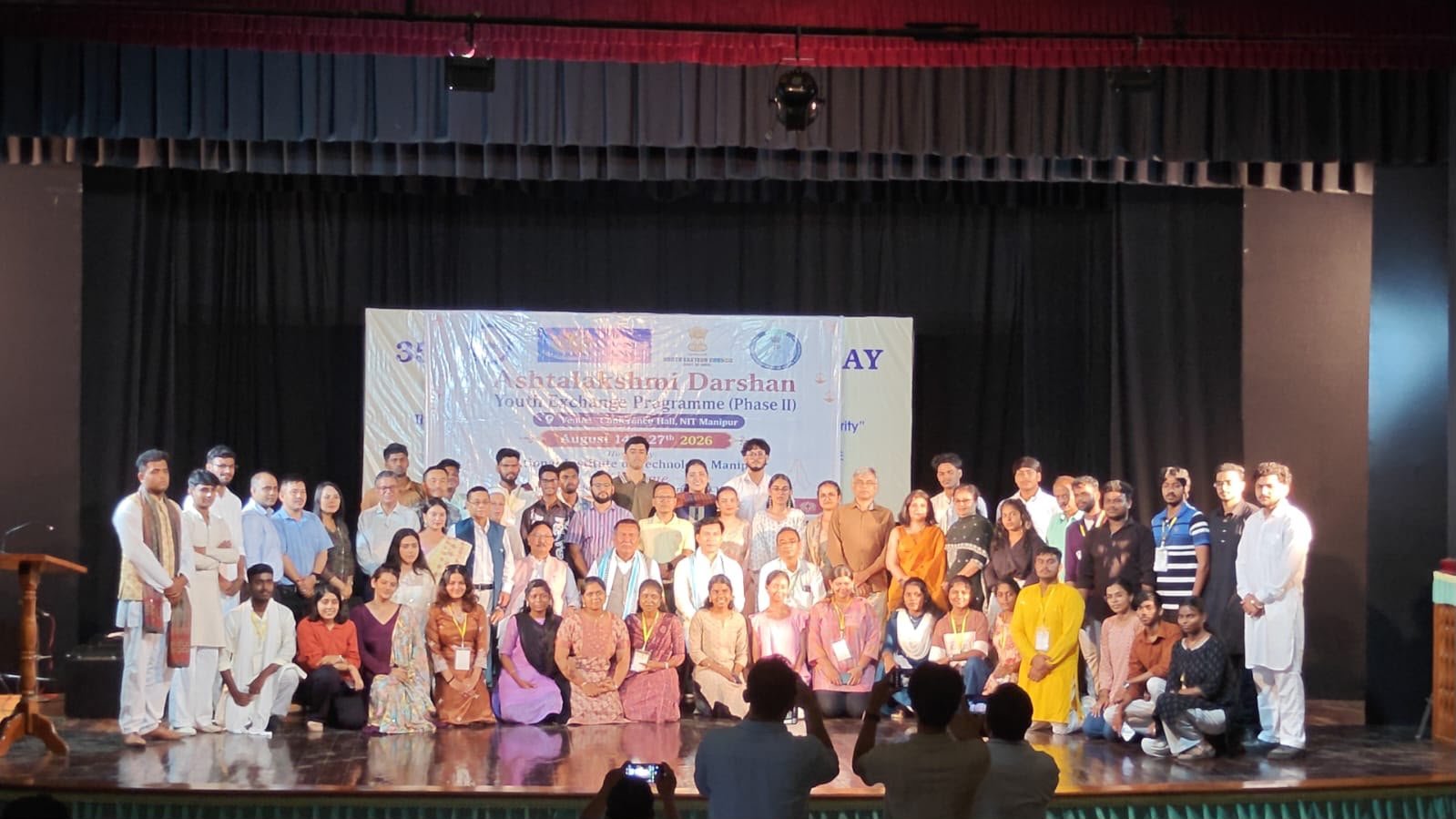
The Ashtalakshmi Darshan Youth Exchange Programme, organised by the National Institute of Technology (NIT), Manipur, in collaboration with the Jawaharlal Nehru Manipur Dance Academy (JNMDA), brought together more than 200 delegates to experience and appreciate the rich cultural heritage, traditions and diversity of Manipur.
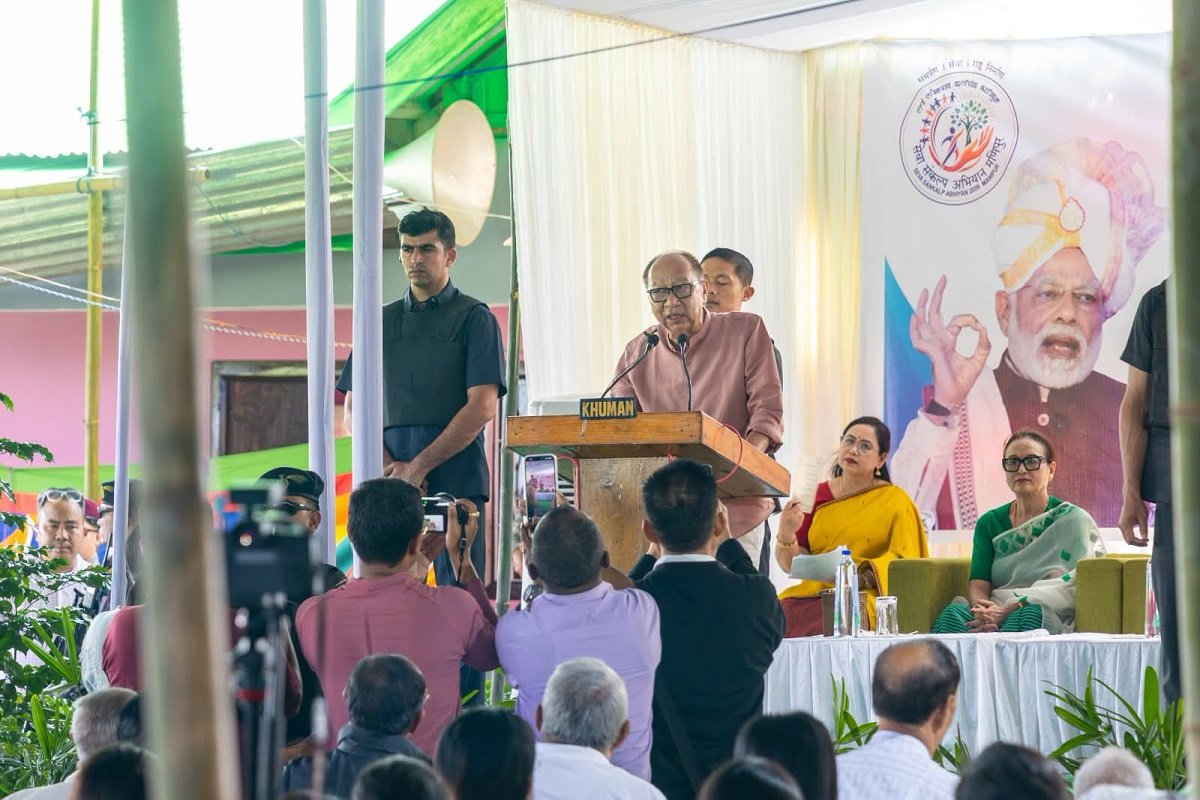
Addressing the participants, Prof. Khumukcham Tomba Singh, Registrar, NIT Manipur, highlighted the State’s remarkable cultural diversity and traditions, including those of its 34 recognised tribes. He emphasised that Manipur’s identity is enriched by the coexistence of diverse communities, languages, customs, traditions and artistic practices.
Chief guest, Ng. Nongyai Singh, highlighted some of the important challenges confronting the Northeastern Region, including refugee concerns, inadequate infrastructure, socio-economic issues and insurgency.
He stressed the need for concerted and sustained efforts to ensure peace, development and protection of indigenous communities.
The visiting delegates expressed their appreciation for Manipur’s vibrant traditions and described its people as peace-loving, welcoming and culturally rich. Their interactions provided them with a deeper understanding of the State beyond its geographical identity and helped them appreciate its social and cultural diversity.
As part of the programme, the delegates visited several important historical, cultural and educational sites across Manipur, including:
Lok Bhavan
Manipur Zoological Garden
Ima Keithel
Andro
Khongjom War Memorial
Marjing Polo Complex
Kakching.
These visits enabled the participants to experience Manipur’s history, heritage, traditional institutions, natural environment and diverse cultural practices. Interaction with district administration officials also provided the delegates with an opportunity to understand the State’s developmental priorities and contemporary challenges.
A major highlight of the programme was the presentation of traditional dance performances at JNMDA, showcasing Manipur’s rich and distinctive artistic traditions.
The performances were appreciated by the visiting delegates and provided an important platform for cultural exchange.
The participants also experienced the diversity of Manipuri cuisine and local food traditions through meals and food experiences at different locations, including ISKCON, Keina and other venues. Their visit to Ima Keithel and the museum provided further exposure to the distinctive social, economic and cultural traditions of Manipur.
The programme went beyond conventional sightseeing by creating opportunities for direct interaction between visiting youth and the people of Manipur. Through visits to historical sites, cultural institutions, local markets and communities, the participants were able to experience the State’s heritage in a direct and meaningful manner.
The programme demonstrated how youth-to-youth interaction can contribute to greater understanding, mutual respect and national unity. By experiencing local traditions, tasting local food, interacting with communities and learning about the State’s contemporary realities, the participants developed a more comprehensive understanding of Manipur and the wider Northeastern Region.
Strengthening National Integration.
The Ashtalakshmi Darshan Youth Exchange Programme is an initiative of the Ministry of Development of North Eastern Region (MDoNER), Government of India, implemented with the support of the North Eastern Council (NEC). The programme was conceived to strengthen national integration and emotional bonding between the Northeastern Region and the rest of the country by providing young people with an opportunity to experience the Northeast firsthand.
The programme derives its name from “Ashtalakshmi,” meaning the eight Lakshmis, representing the eight Northeastern states of India—Arunachal Pradesh, Assam, Manipur, Meghalaya, Mizoram, Nagaland, Sikkim and Tripura. The name symbolises the vision of recognising the Northeast as a region of immense cultural richness, diversity, natural resources and development potential.
Launched in 2025, the programme was conceived as a structured youth-exchange initiative aimed not merely at tourism, but at meaningful cultural immersion, academic interaction, community engagement and exchange of ideas.
Students and young people from different parts of India are given opportunities to visit the Northeastern states, interact with local communities and youth, and gain first-hand knowledge of the region’s history, culture, traditions and contemporary challenges.
The programme was designed on a large scale, envisaging participation of 1,280 students in 40 batches from 28 States and Union Territories, with exchanges covering the eight Northeastern states. Through these interactions, participants are encouraged to become ambassadors of the Northeast and promote greater understanding of the region after returning to their respective states.
As part of this initiative, NIT Manipur successfully organised the Ashtalakshmi Darshan Youth Exchange Programme on three occasions, demonstrating its continued commitment to promoting cultural exchange and national integration.
Despite limitations relating to infrastructure and other logistical challenges, NIT Manipur has successfully undertaken the responsibility of hosting and facilitating such programmes. The Institute’s efforts have provided visiting delegates with meaningful exposure to Manipur’s cultural heritage, people, traditions and contemporary social realities.
The Ashtalakshmi Darshan Youth Exchange Programme represents an important effort to bring the Northeast and the rest of India closer together through direct human and cultural connections. It seeks to bridge geographical distance and limited awareness through first-hand experience, dialogue, cultural interaction and mutual appreciation.
The successful organisation of the programme by NIT Manipur in collaboration with JNMDA reaffirmed the importance of cultural exchange in building bridges among India’s diverse communities. The initiative also highlighted the significant role that educational institutions can play in promoting national integration beyond the classroom.
The programme concluded with a renewed commitment to strengthening national integration, cultural understanding and emotional unity through continued youth exchanges and greater awareness of Manipur’s rich diversity.
Through initiatives such as Ashtalakshmi Darshan, young people from different parts of India are given an opportunity to discover the cultural richness of the Northeast and develop a deeper sense of belonging to the larger national mosaic. The programme therefore contributes meaningfully to the spirit of “Ek Bharat, Shreshtha Bharat” and to the shared vision of a peaceful, inclusive and culturally connected india.