
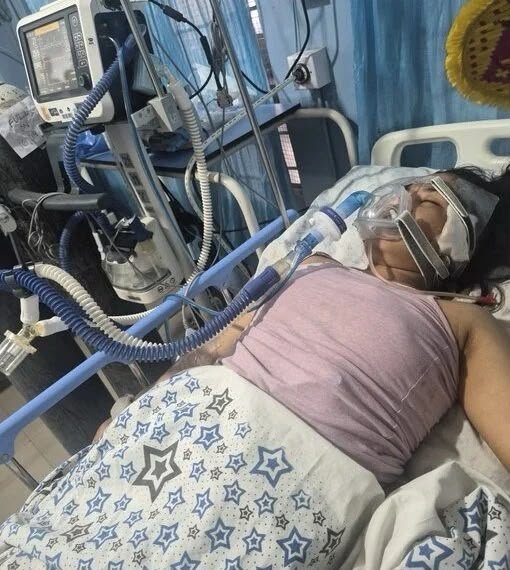
A Kuki woman, Miss Neiesther Luongpi, also known as Neiesther Gangte, has died from bullet injuries sustained during the September 13 attack in Longpi village of Noney district, adding another casualty to the growing violence affecting Kuki-Zo settlements in Manipur.
Neiesther suffered a gunshot wound near her chest and was undergoing treatment through the Tele-ICU at District Hospital, Churachandpur, where she later succumbed to her injuries.
According to local accounts, three residents of Longpi village had left on September 13 to purchase rice and other household necessities. Two of them, Julie Singson, who was pregnant, and Roel Gangte, were shot dead in the attack, while Neiesther was critically injured.
Kuki village organizations have alleged that the attack was carried out by NSCN (IM). However, police have stated that the assailants were unidentified armed men, and no group has officially claimed responsibility for the incident.
The tragedy has also drawn attention to the severe lack of emergency healthcare facilities in remote conflict-affected regions. Villagers said Longpi has only a primary health centre that is unequipped to handle serious trauma cases.
With no accessible road for ambulance services, Neiesther was carried on a makeshift palanquin for nearly 20 kilometres across difficult hill terrain, mud, and steep slopes to reach Phaijang, the nearest point from where she could be transported for advanced medical care.
She was later shifted to District Hospital, Churachandpur, but fell into a coma the following day before eventually passing away.
Community leaders have questioned the absence of security forces in vulnerable Kuki-Zo villages and asked why emergency air evacuation was not arranged for a critically injured civilian in an area inaccessible by vehicles.
The attack took place on September 13, observed by the Kuki community as “Sahnit Ni” or Black Day. Earlier the same day, another Kuki family was attacked in L. Tollen village of Tamenglong district, where a mother and father were killed and their young son was injured.
Neiesther survived the initial shooting but ultimately lost her battle for life. Her death has reignited concerns over both security and the lack of accessible emergency medical services in remote areas of Manipur.
For many residents, the tragedy raises a painful question: while bullets caused the injury, did the absence of timely medical access contribute to the loss of another life?