
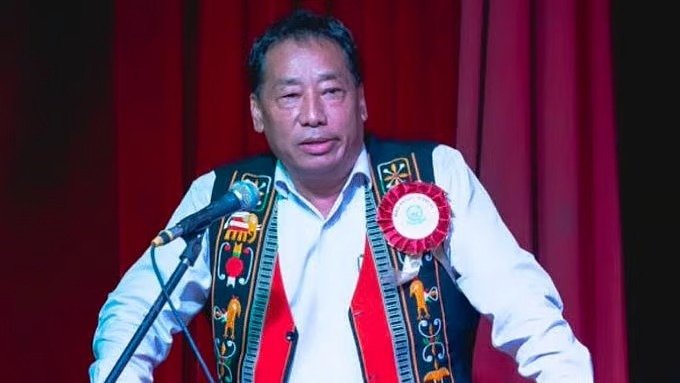
Manipur can transform into a “heaven on earth” provided the state establishes lasting peace, Deputy Chief Minister Losii Dikho stated on April 27. Addressing the launch of the 7th State Level Media Fellowship on Climate Change Reporting (2026–27) at the Civil Secretariat in Mantripukhri, Imphal East, the Deputy Chief Minister underscored that stability is the fundamental prerequisite for unlocking the state’s immense natural and human resources.
Speaking as the chief guest at the event, organized by the Directorate of Environment and Climate Change, Dikho highlighted that Manipur is inherently endowed with rich land resources, diverse hill and valley landscapes, and a dynamic populace. However, he lamented that the ongoing lack of sustained peace has hindered the state’s growth trajectory. He emphasized that despite various efforts to resolve internal challenges, a comprehensive solution has remained elusive, urging for a renewed focus on reconciliation, mutual understanding, and social harmony to ensure long-term stability.
The Deputy Chief Minister noted a direct correlation between regional stability and economic development, pointing out that peaceful regions naturally attract greater investment and tourism. He called upon all citizens and stakeholders to work collectively toward restoring normalcy, ensuring that Manipur’s full economic and tourism potential can finally be realized.
Beyond the call for peace, the event focused on the critical role of environmental journalism. Dikho commended the initiative to support media professionals in covering climate change, which he identified as an undeniable reality. He praised the media’s capacity to address environmental crises through informed and impactful reporting.
T. Brajakumar, Director of Environment and Climate Change, provided context on the fellowship’s impact since its inception in 2018. He revealed that the initiative has supported 48 media fellows to date, resulting in the publication of over 130 articles, many of which have directly influenced government policies and environmental programs. Brajakumar encouraged journalists to elevate the importance of climate change reporting, treating it with the same urgency and depth typically reserved for politics and crime, thereby ensuring that ground realities reach policymakers and the public alike.