
Student organizations representing indigenous hill communities in Manipur, including Kuki-Zo and Hmar groups, on Sunday said tribal populations continue to face a “grave humanitarian crisis” three years after the outbreak of ethnic violence on May 3, 2023.
Organizations such as the Kuki Students’ Organization, Hmar Students’ Association, Zou Sangnaupang Pawlpi, and Gangte Students’ Organization cited large-scale displacement, destruction of villages, and loss of lives, urging the union government to intervene urgently.
In a joint statement, the groups said they had submitted memorandums to the National Human Rights Commission, the National Commission for Scheduled Tribes, the Ministry of Home Affairs, and the Prime Minister’s Office, seeking immediate action. They called for expedited political dialogue under the Suspension of Operations framework involving insurgent groups such as the Kuki National Organization and the United People’s Front and demanded a lasting political solution, including a separate administrative arrangement.
According to the organizations, more than 200 villages were burned, over 250 places of worship destroyed, and hundreds of civilians killed in clashes involving Meitei and tribal communities. They also highlighted incidents of sexual violence and said thousands remain displaced in relief camps without adequate basic services. Calling the situation more than a law-and-order issue, the groups described it as a humanitarian crisis worsened by delayed justice and systemic neglect.
They demanded an impartial probe into the role of former Chief Minister N Biren Singh, alleging failure to act during the crisis. Additional demands included time-bound investigations, fast-track prosecution of perpetrators, immediate relief and compensation for victims, and a high-level inquiry into the looting of arms from state armories.
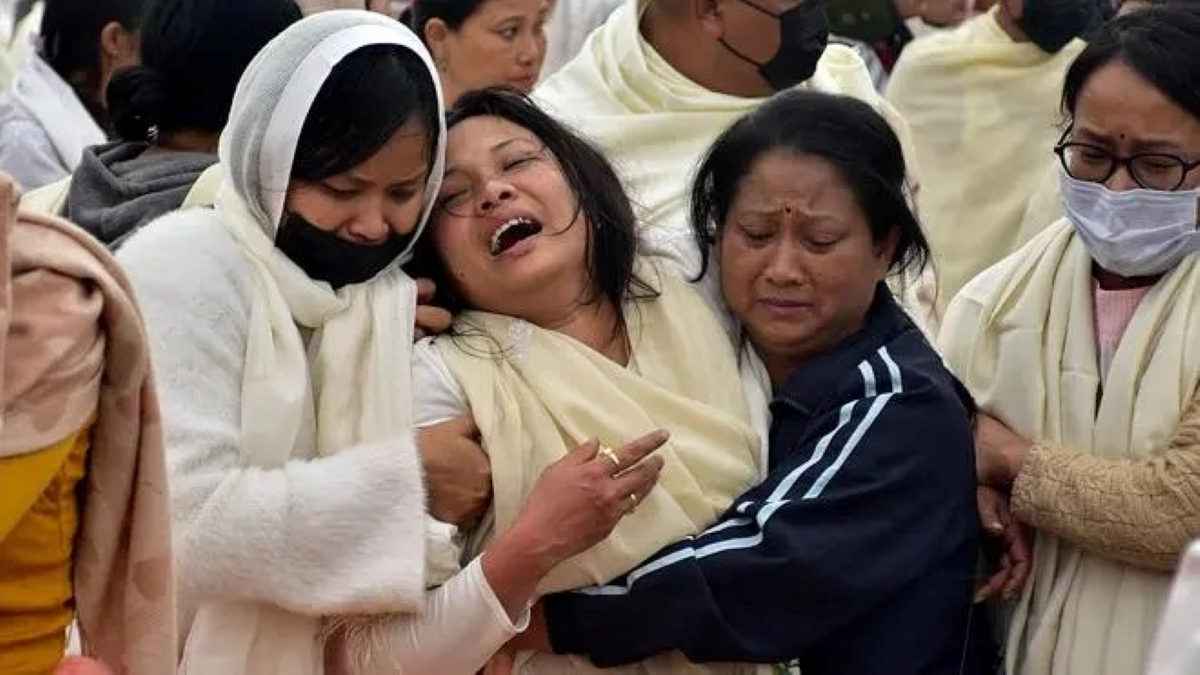
Meanwhile, families of missing persons from valley areas renewed their appeal for justice, stating that more than 30 individuals who went missing during the violence remain untraceable. They said the past three years have been marked by uncertainty and a lack of progress despite filing FIRs, approaching authorities and seeking legal recourse through the Manipur High Court.
Families pointed out that legal provisions allowing a missing person to be declared dead only after seven years have prevented them from obtaining death certificates, thereby blocking access to compensation, government schemes, and job benefits. Many said they continue to struggle financially and emotionally, with no clear answers about their loved ones.
Voices from affected families highlighted their ongoing hardship, with many questioning how they can survive without closure or support. They urged authorities not to let the issue fade and called for urgent steps to trace the missing and ensure justice.
In a separate statement, the Meitei Alliance said the state has entered a “deeply troubling phase” and criticized simplified narratives that portray the conflict as a binary divide between communities. It argued that the violence stems from deeper structural issues, including economic disparities, political complexities, demographic pressures, and long-standing grievances.
The organization also said the failure to adequately protect lives and property has intensified insecurity and mistrust among communities, contributing to cycles of violence. It noted that efforts at dialogue, including a joint platform with the Thadou Inpi Manipur, mark a significant step toward reconciliation.