

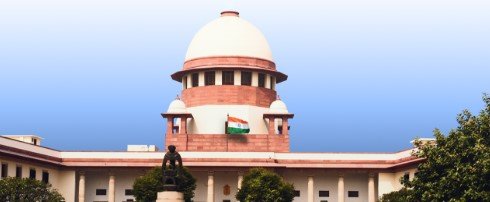
In a landmark judgment that reinforces the principles of gender equality within the Indian Armed Forces, the Supreme Court has ruled that the denial of Permanent Commission (PC) to several women Short Service Commission (SSC) officers was a result of “systemic discrimination.” The apex court observed that the evaluation criteria employed by the Indian Army—specifically the rigorous medical fitness standards applied retrospectively—were “arbitrary and irrational,” effectively penalizing women for the natural aging process during their long legal battle for parity. Delivering the verdict, the bench led by Justice D.Y. Chandrachud emphasized that a “superficial” show of equality does not suffice if the underlying structures remain skewed against women. The court noted that these officers had served the nation for years with distinction, and to deny them the benefits of a permanent career based on physiological benchmarks set for much younger male recruits was an affront to their dignity and constitutional rights.
The Supreme Court’s scathing critique highlights how institutional frameworks can inadvertently perpetuate gender bias under the guise of neutral policy. The court pointed out that while the landmark 2020 judgment had paved the way for women to be considered for Permanent Commission, the implementation process created new hurdles that were nearly impossible to clear. Specifically, the Army’s insistence on “Shape-1” medical fitness—a standard usually met by officers in their 20s—was applied to women who were now in their 40s after years of litigation. The bench remarked that “the structure of our society has been created by males, for males,” and that the evaluation process ignored the unique career trajectories and biological realities of women officers. By striking down these restrictive criteria, the court has ordered the Army to reconsider all affected women officers for PC within three months, ensuring that their medical fitness is assessed based on the standards applicable at the time they hit the 5th or 10th year of service.
This judgment is being hailed as a transformative moment for the Indian judiciary and the military alike, as it moves beyond formal equality toward “substantive equality.” The court clarified that the delay in granting Permanent Commission was not the fault of the women, but a result of the government’s initial resistance, and therefore, the women should not be disadvantaged by the passage of time. The ruling sends a powerful message that the “bravehearts” who serve the country cannot be cast aside by an “exclusionary” mindset. Beyond the immediate relief for the petitioners, the verdict sets a global precedent for addressing “indirect discrimination”—where rules that appear neutral on the surface actually have a disproportionately negative impact on a specific group. As the Indian Army begins the process of re-evaluating these officers, the focus now shifts toward building a more inclusive military culture that recognizes merit and service above outdated gender-based benchmarks.