
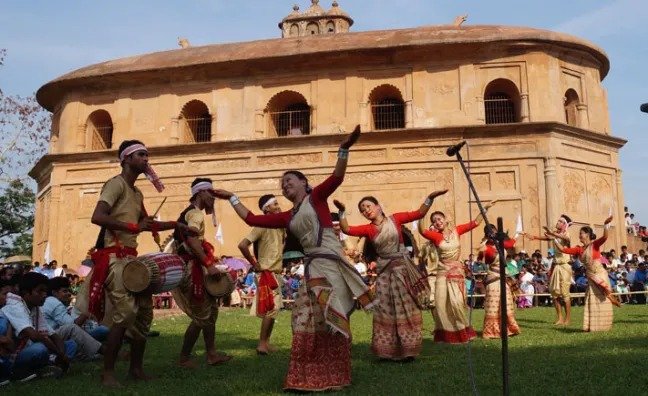
The world’s largest river island, Majuli, came alive today with the vibrant sounds and sights of Goru Bihu. Marking the first day of the week-long Rongali Bihu festival, this traditional observance celebrates the deep-rooted bond between the Assamese agrarian community and their livestock.
As the month of Chaitra draws to a close, farmers across Majuli and parts of the Golaghat district took to the banks of the Brahmaputra River at dawn. Following age-old customs, cattle—including plow bulls and dairy cows—were led to water bodies for a ceremonial bath. The animals were treated with a special paste of black gram and turmeric, known for its antiseptic properties, and gently brushed with dighloti and makhiyoti leaves to ward off insects.
The ritual continued with the traditional offering of vegetables. Farmers fed their livestock pieces of bottle gourd and brinjal while chanting prayers for the animals’ health and productivity in the coming agricultural cycle. Local resident Nitul Hazarika noted that Goru Bihu is not merely a festival but a vital practice of livestock care that reflects the community’s dependence on farming for their livelihoods.
The festivities also caught the attention of global visitors. Louis, a tourist from Chile, shared his excitement after witnessing the riverbank activities and cultural performances, highlighting how these local traditions continue to fascinate the international community. Following the rituals, families gathered to prepare traditional meals, featuring vegetables roasted on bamboo sticks, a hallmark of the day’s culinary customs.
As the cattle return to their sheds tonight to be tied with new ropes, the people of Assam now look forward to Manuh Bihu tomorrow, shifting the focus of the New Year celebrations to human bonds and community feasting.