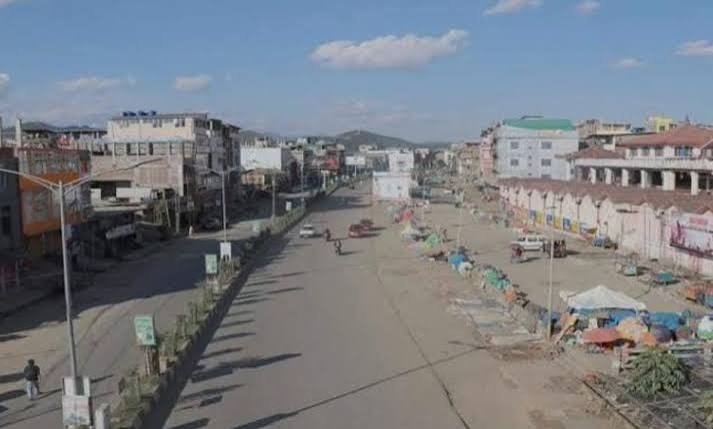


A 5.2 magnitude earthquake struck the Kamjong district of Manipur early Tuesday morning, sending strong tremors across the state and into neighboring regions. According to the National Centre for Seismology (NCS), the seismic event was recorded at 5:59 AM IST, with its epicenter located in Kamjong at a depth of approximately 62 kilometers beneath the surface.
While the earthquake was strong enough to wake many residents from their sleep, prompting some to briefly step out of their homes in caution, officials have confirmed that there are no immediate reports of loss of life or significant structural damage. The tremors were felt across several districts, including Ukhrul and the state capital, Imphal, with reports of mild shaking reaching parts of neighboring Meghalaya.
Experts note that because the earthquake occurred at a moderate depth of 62 km, the impact was distributed over a wider area, which often results in less surface-level destruction compared to shallower seismic events. Nonetheless, the incident has served as a stark reminder of the region’s geological sensitivity.
This tremor follows a recent pattern of seismic activity in Northeast India, which frequently experiences earthquakes due to its location in one of the world’s most seismically active zones. Over the past week, several states in the region, including Mizoram, Sikkim, and Arunachal Pradesh, have recorded earthquakes of varying magnitudes. Data from the NCS suggests that the region sees more than one earthquake per week on average, typically ranging between magnitudes 3 and 4.
Given the frequency of these events and the region’s mountainous terrain, authorities continue to emphasize the critical need for strict adherence to earthquake-resistant construction practices. Whether in public or private infrastructure, experts urge that building codes must be rigorously followed to mitigate potential risks. For now, disaster management teams in Manipur remain on alert to monitor the situation, while residents are advised to stay cautious of potential aftershocks.